Жанры книг

Современная проза. Страница 51

Сортировать как: по популярности

Под местным наркозом - Грасс Гюнтер
Под местным наркозом

338

  • Автор: Грасс Гюнтер

  • Дата добавления: 14/04/2015

  • Язык книги: Русский

  • Кол-во страниц: 56

Гюнтер Грасс – лауреат Нобелевской премии, автор знаменитых романов и повестей «Жестяной барабан», «Собачья жизнь», «Из дневника улитки», «Рождение из головы» и др. Писательскую манеру Грасса отличают гротеск, пародийность и притчевость. «Под местным наркозом» можно назвать повестью-воспоминанием: жизнь целого поколения проходит перед глазами героя, сидящего в кресле дантиста.
Перегрузка - Хейли Артур
Перегрузка

338

  • Автор: Хейли Артур

  • Дата добавления: 15/04/2015

  • Язык книги: Русский

  • Кол-во страниц: 125

Однажды жизнь нарушает свой нормальный, привычный ход — и обращается в дикую, все нарастающую круговерть событий, захватывающих в свою орбиту множество людей...Профессионалов, совершающих немыслимое, дабы предотвратить последствия страшной катастрофы...Политиков, оголтело рвущихся к власти, равнодушных к чужой трагедии...Проходимцев, уловивших запах больших денег, и террористов, использующих любой шанс...Это — ПЕРЕГРУЗКА. Перегрузка, которая вот-вот разразится ВЗРЫВОМ...
Красная трава - Виан Борис
Красная трава

338

  • Автор: Виан Борис

  • Дата добавления: 20/05/2015

  • Язык книги: Русский

  • Кол-во страниц: 28

Несмотря на многократные заявления в том духе, что литература для него — только вид коммерции, Борис Виан (1920-1959) с самого начала своей литературной деятельности воспринимался в артистической среде Парижа как один из самых ярких представителей французского авангарда, подтвердив эту репутацию принесшим ему славу романом «Пена дней» (1947). Еще годом раньше вышел в свет роман «Я заплюю ваши могилы», подвергшийся впоследствии запретам, как и еще две книги, включая «Мертвые все одного цвета» (1947). Виан выдал это произведение за перевод из наследия американского мастера «жестоких» детективов Вернона Салливена. Эта маска потребовалась Виану, поскольку во Франции его книги производили слишком шокирующее впечатление предельной откровенностью, с какой изображена люмпенская среда огромного города. Преобладающая в романах Виана установка на абсолютную достоверность картины, где все названо своими именами, органично соединена в этой остросюжетной прозе с философской проблематикой бунта против жалкого человеческого удела, вызова бытующим представлениям о морали и самоутверждения личности, стремящейся создать для себя ситуации, которые требуют мобилизации всех духовных сил и готовности к гибели во имя сохранения свободы выбора и поступка. В западной литературе XX века Виан занимает место между Генри Миллером и Альбером Камю, сочетая договаривающий все до конца фактографизм с интеллектуальной насыщенностью, отличающей французскую прозу. Его книги, оставаясь популярными в самых разных читательских кругах, давно признаны современной классикой.
Линия жизни - Семина Ирина Константиновна
Линия жизни

338

Einstein's Monsters - Amis Martin
Einstein's Monsters

338

  • Автор: Amis Martin

  • Дата добавления: 24/07/2015

  • Язык книги: Английский

  • Кол-во страниц: 28

MARTIN AMIS hates nuclear weapons, and he doesn't care who knows it. In fact, he wants everyone to know it. At mid-career, he has virtually ceased to be a writer of fiction-from 1974 to 1984, he published five comic novels, including the hugely successful Money-and has metamorphosed instead into a kind of anti-nuclear polemicist. Einstein's Monsters, his most recent work, is a collection of stories based on the theme of nuclear holocaust. Lest anyone think this is a chance engagement, Amis has followed up Einstein's Monsters with an article in the October Esquire railing against the insanity of American nuclear planning. The article, a rehash of the Introduction to the present volume, is most notable not for its politics but for the warning it includes to those of us waiting for the return of a depoliticized Martin Amis: "When nuclear weapons become real to you,' he tells us, "hardly an hour passes without some throb or flash, some heavy pulse of imagined super-catastrophe.' The hydrogen bomb has claimed its first English target, and it is the career of Martin Amis.In his new role, Amis runs around like the sheriff in Jaws, as if he's the only person who knows there's a shark in town and everyone else is trying to keep the beaches open. The Esquire article gives a good sense of the fundamental cheesiness of his political thinking. The members of the Washington nuclear establishment, he says, don't mind talking about "X-ray lasers and hard-kill capabilities,' but they "go green' when the author tries to light up a cigarette. When the author interviews an attache from the Soviet embassy, on the other hand, things go differently; the two "drink a lot of coffee and smoke up a storm.' "Sergi and I got along fine,' Amis tells us. "He didn't want to kill me. I didn't want to kill him.' Amis has invented the Marlboro Peace Plan.Einstein's Monsters is only a touch more subtle. It consists of five stories, along with both an "Author's Note' and an Introduction. In his Note, Amis vacillates upon the question of whether the stories are polemical. "If they arouse political feelings,' he tells us, "that is all to to the good,' but really, they "were written with the usual purpose in mind: that is to say, with no purpose at all-except, I suppose, to give pleasure, various kinds of complicated pleasure.'If there is any confusion in the reader's mind, however, it is cleared up by the first story, "Bujak and the Strong Force.' Reading it, one is reminded of the experience of sitting in a college fiction workshop, the excited author right there next to you, enthusiastically explaining the intricacies of his story's symbolic order.Bujak, the title character, is a hugely powerful Eastern European living in a bad neighborhood in London. A survivor of the Nazi occupation of Poland, he spends a great deal of time arguing with the (American) narrator over the value of revenge. The narrator is anti, Bujak is pro. Bujak polices his block, rounds up petty criminals, makes the streets safe for young ladies at night. "He was our deterrent,' the narrator says. At the end of the story, when Bujak returns to his home to find his mother, daughter, and granddaughter brutally rape-murdered, the drunken perpetrators lying asleep on the floor, we expect him to exact some terrible revenge. But he doesn't. "Why?' the narrator asks. "No court on earth would have sent you down.' (Is this how Americans speak, by the way?) "When I had their heads in my hands,' Bujak replies, "I thought how incredibly easy to grind their faces together. But no… I had no wish to add to what I found.' It's… unilateral disarmament!Throughout Einstein's Monsters Amis the author is at war with Amis the nuclear theoretician. "Insight at Flame Lake,' for example, would have been a fine schizophrenic-breakdown story, except that Amis the theoretician felt compelled to tack on an anti-nuclear subtext. "Thinkability,' the long introduction to Einstein's Monsters, has its flashes of brilliant writing (the generations of unborn babies who would be aborted by a nuclear war are described as "queueing up in spectral relays until the end of time'), but it is marred by the same sort of simplistic reasoning that plagues the Esquire piece. Amis wants to pin all our problems on the existence of nuclear weapons. In the face of these missiles, no merely personal atrocity matters: "What vulgar outrage or moronic barbarity can compare with the black dream of nuclear exchange?' It's like asking a meter maid, "How dare you give me a ticket when there are Russian tanks illegally parked on the streets of Kabul?' But Amis the satirist knows that it takes a lot more than nuclear weaponry to explain the spiritual malaise of our century, just as Amis the writer knows (or ought to know) that there is always more than one explanation for any human phenomenon. One suspects, in fact, that Amis's opposition to the Strategic Defense Initiative is derived not from the fear of a perilous escalation in the arms race, but from a (perhaps unconscious) perception that, with nuclear weapons gone, the novelist would have to face the fact of unexcused human weakness again.
Cocaine Nights - Ballard James Graham
Cocaine Nights

338

  • Автор: Ballard James Graham

  • Дата добавления: 26/07/2015

  • Язык книги: Английский

  • Кол-во страниц: 69

There’s something wrong with Estrella Del Mar, the lazy, sun-drenched retirement haven on Spain’s Costa Del Sol. Lately this sleepy hamlet, home to hordes of well-heeled, well-fattened British and French expatriates, has come alive with activity and culture; the previously passive, isolated residents have begun staging boat races, tennis competitions, revivals of Harold Pinter plays, and lavish parties. At night the once vacant streets are now teeming with activity, bars and cafes packed with revelers, the sidewalks crowded with people en route from one event to the next.Outward appearances suggest the wholesale adoption of a new ethos of high-spirited, well-controlled collective exuberance. But there’s the matter of the fire: The house and household of an aged, wealthy industrialist has gone up in flames, claiming five lives, while virtually the entire town stood and watched. There’s the matter of the petty crime, the burglaries, muggings, and auto thefts which have begun to nibble away at the edges of Estrella Del Mar’s security despite the guardhouses and surveillance cameras. There’s the matter of the new, flourishing trade in drugs and pornography. And there’s the matter of Frank Prentice, who sits in Marbella jail awaiting trial for arson and five counts of murder, and who, despite being clearly innocent, has happily confessed.It is up to Charles Prentice, Frank’s brother, to peel away the onionlike layers of denial and deceit which hide the rather ugly truth about this seaside idyll, its residents, and the horrific crime which brought him here. But as is usually the case in a J.G. Ballard book, the truth comes with a price tag attached, and likely without any easing of discomfort for his principal characters.Cocaine Nights marks a partial return on Ballard’s part to the provocative, highly-successful mid-career methodology employed in novels such as Crash and High Rise: after establishing himself as a science fiction guru in the 1960s, Ballard stylistically shifted gears towards an unnerving, futuristic variant on social realism in the 1970s. Both Crash and High Rise were what-if novels, posing questions as to what the likely results would be if our collective fascination with such things as speed, violence, status, power, and sex were carried just a little bit further: How insane, how brutal could our world become if we really cut loose?Cocaine Nights asks a question better suited to the ’90s, the age of gated communities and infrared home security systems: Does absolute security guarantee isolation and cultural death? Conversely, is a measure of crime an essential ingredient in a vibrant, living, properly functioning social system? Is it true, as a character asserts, that “Crime and creativity go together, always have done,” and that “total security is a disease of deprivation”? Suffice to say that the answers presented in Nights will be anathema to moral absolutists; the world of Ballard’s fiction, like life in the hyperkinetic, relativistic 1990s, abounds with uncomfortable grey areas.On the surface, Cocaine Nights is a whodunit and a race against time, but as it proceeds – and as preconceived conceptions of good and evil begin to dissolve – it evolves into a thoughtful, faintly frightening look at under-examined aspects of 1990s western society. As is his wont, Ballard confronts his readers with some faintly outlandish hypotheses unlikely to be embraced by many, but which nonetheless serve to provoke both thought and a bit of paranoia; it’s a method that Ballard has developed and refined on his own, and as usual, it propels his novel along marvellously.Cocaine Nights doesn’t have either the broad sweep or brute impact of the landmark Crash, but it retains enough social relevance and low-key creepiness to more than satisfy Ballardphiles. As is often the case in Ballard’s alternate reality, it’s a given that his most appealing, human characters turn out to be the most twisted, and that even the most normal of events turn out to be governed by a perverse, malformed logic; that this logic turns out to be grounded in sound sociological and psychological principles is its most horrific feature.David B. Livingstone
Боричев Ток, 10 - Левитес Ирина
Боричев Ток, 10

338

  • Автор: Левитес Ирина

  • Дата добавления: 28/08/2015

  • Язык книги: Русский

  • Кол-во страниц: 27

Книга Ирины Левитес, номинанта престижных литературных премий И. П.Белкина и Ю. Казакова, — это добрая, веселая и печальная история о любви взрослых к детям, детей к взрослым. Главные герои повести — девочка Нина и ее младший брат Валерик. А также многочисленные родственники и друзья, которые жили в Киеве на улице с необычным названием — Боричев Ток. Пожилые люди еще говорят на идише, готовят фиш и цимес, а молодым только кажется, что они независимы от еврейского уклада, на самом деле они впитывают его всей душой и сохраняют навсегда. Нина и Валерик знают, что они вернутся, когда зацветут каштаны, и старый дом распахнет навстречу двери, и бабушки будут слушать их восторженные рассказы, и удивляться, и пугаться, и радоваться, и кормить. И никто никогда не умрет .
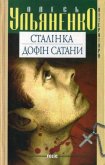
Сталінка - Ульяненко Олесь
Сталінка

338

  • Автор: Ульяненко Олесь

  • Дата добавления: 27/12/2016

  • Язык книги: Украинский

  • Кол-во страниц: 20

Олесь Ульяненко — мабуть, найрадикальніший і найжорсткіший сучасний український прозаїк, скандальний і непередбачуваний майстер слова. «Сталінка» — найбільш резонансний твір письменника, один із перших культових українських романів нового часу. Саме він здобувся на нищівну критику, саме за нього автор згодом отримав малу Шевченківську премію. Письменник змальовує життя в божевільні, де люди перетворюються на рослини. Але ж не всі. Головний герой Йона намагається втекти на волю, але що таке воля в «країні вічних дурнів і катів»? — Хаос, обман, розпуста, злочини… І тільки віра в Бога допомагає людині вистояти в цьому божевільному світі.
Клеа - Даррелл Лоренс
Клеа

337

Дипломат, учитель, британский пресс-атташе и шпион в Александрии Египетской, старший брат писателя-анималиста Джеральда Даррела, Лоренс Даррел (1912-1990) стал всемирно известен после выхода в свет «Александрийского квартета», разделившего англоязычную критику на два лагеря: первые прочили автору славу нового Пруста, вторые видели в нем литературного шарлатана. Четвертый роман квартета, «Клеа»(1960) – это развитие и завершение истории, изложенной в разных ракурсах в «Жюстин», «Бальтазаре» и «Маунтоливе». Герои квартета, попавшие в водоворот Второй мировой войны, распутывают, наконец, хитросплетения своего прошлого и, с неизбежными потерями, делают шаг в будущее.
Почетный консул - Грин Грэм
Почетный консул

337

  • Автор: Грин Грэм

  • Дата добавления: 14/04/2015

  • Язык книги: Русский

  • Кол-во страниц: 63

Кораблики - Кавабата Ясунари
Кораблики

337

Призраки - Остер Пол Бенджамин
Призраки

337