Жанры книг

Современная проза. Страница 49

Сортировать как: по популярности

Рукопись найденная в кармане - Кортасар Хулио
Рукопись найденная в кармане

376

В увлекательных рассказах популярнейших латиноамериканских писателей фантастика чудесным образом сплелась с реальностью: магия индейских верований влияет на судьбы людей, а люди идут исхоженными путями по лабиринтам жизни. Многие из представленных рассказов публикуются впервые.
Аванпост - Рэйтё Енё
Аванпост

376

  • Автор: Рэйтё Енё

  • Дата добавления: 07/05/2015

  • Язык книги: Русский

  • Кол-во страниц: 44

Роза и тис - Кристи Агата
Роза и тис

376

  • Автор: Кристи Агата

  • Дата добавления: 28/07/2015

  • Язык книги: Русский

  • Кол-во страниц: 46

Хотя этот роман вышел в 1947 году, идею его писательница, по собственному признанию, вынашивала с 1929 года. «Это были смутные очертания того, что, как я знала, в один прекрасный день появится на свет». В самом деле, точно сформулировать идею книги сложно, так как в романе словно бы два уровня: первый – простое повествование, гораздо более незатейливое, чем в предыдущих романах Уэстмакотт, однако второй можно понимать как историю о времени и выборе – несущественности первого и таинственности второго. Название взято из строки известного английского поэта Томаса Эллиота, предпосланной в качестве эпиграфа: «Миг розы и миг тиса – равно мгновенны».Роман повествует о юной и знатной красавице, которая неожиданно бросает своего сказочного принца ради неотесанного выходца из рабочей среды. Сюжет, конечно, не слишком реалистичный, а характеры персонажей, несмотря на тщательность, с которой они выписаны, не столь живы и реальны, как в более ранних романах Уэстмакотт. Так что, если бы не их детализированность, они вполне бы сошли за героев какого-нибудь детектива Кристи.Но если композиция «Розы и тиса» по сравнению с предыдущими романами Уэстмакотт кажется более простой, то в том, что касается психологической глубины, впечатление от него куда как более сильное. Конечно, прочувствовать сцену, когда главные герои на концерте в Уингмор-Холле слушают песню Рихарда Штрауса «Утро» в исполнении Элизабет Шуман, смогут лишь те из читателей, кто сам слышал это произведение и испытал силу его эмоционального воздействия, зато только немногие не ощутят мудрость и зрелость замечаний о «последней и самой хитроумной уловке природы» иллюзии, порождаемой физическим влечением. Не просто понять разницу между любовью и «всей этой чудовищной фабрикой самообмана», воздвигнутой страстью, которая воспринимается как любовь – особенно тому, кто сам находится в плену того или другого. Но разница несомненно существует, что прекрасно осознает одна из самых трезвомыслящих писательниц.«Роза и тис» отчасти затрагивает тему политики и выдает наступившее разочарование миссис Кристи в политических играх. Со времен «Тайны Чимниз» пройден большой путь. «Что такое, в сущности, политика, – размышляет один из героев романа, – как не ряд балаганов на мировой ярмарке, в каждом из которых предлагается по дешевке лекарство от всех бед?»Здесь же в уста своих героев она вкладывает собственные размышления, демонстрируя незаурядное владение абстрактными категориями и мистическое приятие природы – тем более завораживающее, что оно так редко проглядывает в произведениях писательницы.Центральной проблемой романа оказывается осознание И иллюзорность выбора. «Существует ли в действительности выбор? Хоть в чем-нибудь?» спрашивает героиня и не находит реального ответа на свой метафизический вопрос. Этот вопрос она задает, оставив свой сказочный замок в Корнуолле ради унизительного существования рядом с бессовестным и лицемерным «пролетарием» в запущенной комнатке в придуманном Кристи восточноевропейском Заграде (который, впрочем, расположен не в Югославии между Белградом и Загребем, как могло бы показаться, а в Словакии).Мнения критиков по поводу достоинств романа разделились. «Романтический сахарин» – так отозвался о романе суховатый Джеффри Фейнмен. Зато Дороти Хьюз отнеслась к нему, как и к остальным произведениям Уэстмакотт, с куда большим пониманием: «Уэстмакоттовские романы столь же далеки от традиционного дамского романа, как от книги про Винни-Пуха. Вряд ли те, кто выступает с предвзятыми мнениями о них, когда-либо читали эти книги». Макс Мэллоун, весьма беспристрастный в этом вопросе, называл «Розу и тис» «самым сильным и драматичным» среди всех романов.Впервые вышел в Англии в 1947 году.Переведен А. Ващенко специально для настоящего издания и публикуется впервые.
Проблема 2000 - Акунин Борис
Проблема 2000

375

Ангелы на кончике иглы - Дружников Юрий
Ангелы на кончике иглы

375

  • Автор: Дружников Юрий

  • Дата добавления: 18/03/2015

  • Язык книги: Русский

  • Кол-во страниц: 131

Действие романа, написанного в Советском Союзе и впервые опубликованного в Нью-Йорке в 1989 году, происходит в редакции одной из центральных советских газет. Обращаясь к эпохе «оттепели» и «застоя», автор раскрывает закулисные тайны журналистики тех лет и «мафиозную» природу правящих верхов. Это роман об интеллигенции и власти, любви и предательстве. В настоящее время Ю. Дружников – президент Международного ПЕН-клуба. И к сведению, «на кончике иглы может уместиться количество ангелов, равное квадратному корню из двух».
CITY - Барикко Алессандро
CITY

375

Недовольный всем, что вышло из-под его пера, Алессандро Барикко погрузился в современность и освоил профессию градостроителя. Так возник «City» — роман-город, с кварталами — сюжетными линиями и улицами-персонажами. Как и полагается уважающему себя городу, в нем есть все для увлекательной жизни: боксеры, футболисты, профессора, парикмахер, генерал, гениальный подросток, девушка на первом плане. А если этого покажется мало, — за углом демонстрируют захватывающий вестерн. Барикко не изменяет своему обыкновению — приговаривать к смерти полюбившихся ему героев. Так легче расставаться с ними...
Клеа - Даррелл Лоренс
Клеа

375

Дипломат, учитель, британский пресс-атташе и шпион в Александрии Египетской, старший брат писателя-анималиста Джеральда Даррела, Лоренс Даррел (1912-1990) стал всемирно известен после выхода в свет «Александрийского квартета», разделившего англоязычную критику на два лагеря: первые прочили автору славу нового Пруста, вторые видели в нем литературного шарлатана. Четвертый роман квартета, «Клеа»(1960) – это развитие и завершение истории, изложенной в разных ракурсах в «Жюстин», «Бальтазаре» и «Маунтоливе». Герои квартета, попавшие в водоворот Второй мировой войны, распутывают, наконец, хитросплетения своего прошлого и, с неизбежными потерями, делают шаг в будущее.
Cocaine Nights - Ballard James Graham
Cocaine Nights

375

  • Автор: Ballard James Graham

  • Дата добавления: 26/07/2015

  • Язык книги: Английский

  • Кол-во страниц: 69

There’s something wrong with Estrella Del Mar, the lazy, sun-drenched retirement haven on Spain’s Costa Del Sol. Lately this sleepy hamlet, home to hordes of well-heeled, well-fattened British and French expatriates, has come alive with activity and culture; the previously passive, isolated residents have begun staging boat races, tennis competitions, revivals of Harold Pinter plays, and lavish parties. At night the once vacant streets are now teeming with activity, bars and cafes packed with revelers, the sidewalks crowded with people en route from one event to the next.Outward appearances suggest the wholesale adoption of a new ethos of high-spirited, well-controlled collective exuberance. But there’s the matter of the fire: The house and household of an aged, wealthy industrialist has gone up in flames, claiming five lives, while virtually the entire town stood and watched. There’s the matter of the petty crime, the burglaries, muggings, and auto thefts which have begun to nibble away at the edges of Estrella Del Mar’s security despite the guardhouses and surveillance cameras. There’s the matter of the new, flourishing trade in drugs and pornography. And there’s the matter of Frank Prentice, who sits in Marbella jail awaiting trial for arson and five counts of murder, and who, despite being clearly innocent, has happily confessed.It is up to Charles Prentice, Frank’s brother, to peel away the onionlike layers of denial and deceit which hide the rather ugly truth about this seaside idyll, its residents, and the horrific crime which brought him here. But as is usually the case in a J.G. Ballard book, the truth comes with a price tag attached, and likely without any easing of discomfort for his principal characters.Cocaine Nights marks a partial return on Ballard’s part to the provocative, highly-successful mid-career methodology employed in novels such as Crash and High Rise: after establishing himself as a science fiction guru in the 1960s, Ballard stylistically shifted gears towards an unnerving, futuristic variant on social realism in the 1970s. Both Crash and High Rise were what-if novels, posing questions as to what the likely results would be if our collective fascination with such things as speed, violence, status, power, and sex were carried just a little bit further: How insane, how brutal could our world become if we really cut loose?Cocaine Nights asks a question better suited to the ’90s, the age of gated communities and infrared home security systems: Does absolute security guarantee isolation and cultural death? Conversely, is a measure of crime an essential ingredient in a vibrant, living, properly functioning social system? Is it true, as a character asserts, that “Crime and creativity go together, always have done,” and that “total security is a disease of deprivation”? Suffice to say that the answers presented in Nights will be anathema to moral absolutists; the world of Ballard’s fiction, like life in the hyperkinetic, relativistic 1990s, abounds with uncomfortable grey areas.On the surface, Cocaine Nights is a whodunit and a race against time, but as it proceeds – and as preconceived conceptions of good and evil begin to dissolve – it evolves into a thoughtful, faintly frightening look at under-examined aspects of 1990s western society. As is his wont, Ballard confronts his readers with some faintly outlandish hypotheses unlikely to be embraced by many, but which nonetheless serve to provoke both thought and a bit of paranoia; it’s a method that Ballard has developed and refined on his own, and as usual, it propels his novel along marvellously.Cocaine Nights doesn’t have either the broad sweep or brute impact of the landmark Crash, but it retains enough social relevance and low-key creepiness to more than satisfy Ballardphiles. As is often the case in Ballard’s alternate reality, it’s a given that his most appealing, human characters turn out to be the most twisted, and that even the most normal of events turn out to be governed by a perverse, malformed logic; that this logic turns out to be grounded in sound sociological and psychological principles is its most horrific feature.David B. Livingstone
Seeing - Saramago Jose
Seeing

375

  • Автор: Saramago Jose

  • Дата добавления: 26/07/2015

  • Язык книги: Английский

  • Кол-во страниц: 45

Some years ago a reliable friend told me I should read Jose Saramago's Blindness. Faced with pages of run-on sentences and unparagraphed dialogue without quotation marks, I soon quit, snarling about literary affectations. Later I tried again, went further, and quit because I was scared. Blindness is a frightening book. Before I'd let an author of such evident power give me the horrors, he'd have to earn my trust. So I went back to the earlier novels and put myself through a course of Saramago.It's hard not to gallop through prose that uses commas instead of full stops, but once I learned to slow down, the rewards piled up: his sound, sweet humour, his startling imagination, his admirable dogs and lovers, the subtle, honest workings of his mind. Here indeed was a novelist worthy of a reader's trust. So at last I could read his great book – or his greatest until its sequel.Accepting his Nobel prize, Saramago, calling himself "the apprentice", said: "The apprentice thought, 'we are blind', and he sat down and wrote Blindness to remind those who might read it that we pervert reason when we humiliate life, that human dignity is insulted every day by the powerful of our world, that the universal lie has replaced the plural truths, that man stopped respecting himself when he lost the respect due to his fellow-creatures."This, on the face of it, is an odd description of Blindness, for in that book it is powerless people who insult human dignity – ordinary people, terrified at finding themselves and everyone else blind, everything out of control. Some behave with stupid, selfish brutality, sauve qui peut. The group of men who seize power in an asylum and use and abuse the weaker inmates have indeed abandoned self-respect and human decency: they are a microcosm of the corruption of power. But the truly powerful of our world don't even appear in Blindness. Seeing is all about them: the perverters of reason, the universal liars. It is about government gone wrong.Very evidently Saramago's novels are not simple parables. It would be rash to "explain" what all the people (but one) in the first book were blind to, or what it is that the citizens of Seeing see. What's clear is that they're the same people, it's the same city, a few years later: one book illuminates the other in ways I can only begin to glimpse.The story begins with those ordinary citizens, who not so long ago regained their sight and their tranquil day-to-day lives, doing something that seems quite unconnected with vision or lack of it. It is voting day, and 83% of them, after not going to the polls at all in the morning, go in the late afternoon and cast a blank ballot.We see the dismay of bureaucrats, the excitement of journalists, the hysteria of the government, and the mild non-response of the citizens, who, when asked how they voted, refuse to say, reminding the questioner that the question is illegal. The satire is at first quite funny, and I thought it was going to be a light, Voltairean tale.Turning in a blank ballot is a signal unfamiliar to most Britons and Americans, who aren't yet used to living under a government that has made voting meaningless. In a functioning democracy, one can consider not voting a lazy protest liable to play into the hands of the party in power (as when low Labour turn-out allowed Margaret Thatcher's re-elections, and Democratic apathy secured both elections of George W Bush). It comes hard to me to admit that a vote is not in itself an act of power, and I was at first blind to the point Saramago's non-voting voters are making. I began to see it at last, when the minister of defence announces that what the country is facing is terrorism.Other ministers oppose him but he gets what he wants – a state of emergency, then the exodus of the government, by night, from the capital city, which is declared to be under siege. A bomb is exploded (by terrorists, of course, as the media report), killing quite a few people. An attempted evacuation of the 17% of voters who marked their ballots ends in failure, as the government forgets to tell the troops blocking all the roads to let the refugees through. The so-called terrorists in the city, still mild and peaceable, help the refugees carry back upstairs all they tried to take with them – the tea service, the silver platter, the painting, grandpa…The humour is still tender but the tone darkens, tension rises. Characters, individuals, begin to come to the fore – all nameless except a dog, Constant, the dog of tears from Blindness. The ministers jockey horribly for power. A superintendent of police is sent into the city to find the woman who did not go blind when everyone else did four years ago, sought as the link between the "plague of white blindness and the plague of blank ballots". The superintendent becomes our viewpoint and mediator; we begin to see as he begins to see. He brings us to the woman, the gentle light-bearer of the first book. But where that story began with an awful darkness that slowly opened into light, this one goes right down into the dark.Jose Saramago will be 84 this year. He has written a novel that says more about the days we are living in than any book I have read. He writes with wit, with heartbreaking dignity, and with the simplicity of a great artist in full control of his art. Let us listen to a true elder of our people, a man of tears, a man of wisdom.Ursula K Le Guin 's Gifts is published by Orion.
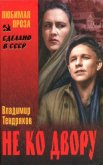
Не ко двору (сборник) - Тендряков Владимир Федорович
Не ко двору (сборник)

375

Известный русский писатель Владимир Федорович Тендряков - автор целого ряда остроконфликтных повестей о деревне, духовно-нравственных проблемах советского общества. Вот и герой одной из них - "He ко двору" (экранизирована в 1955 году под названием "Чужая родня", режиссер Михаил Швейцер, в главных ролях - Николай Рыбников, Нона Мордюкова, Леонид Быков) - тракторист Федор не мог предположить до женитьбы на Стеше, как душно и тесно будет в пронафталиненном мирке ее родителей. Настоящий комсомолец, он искренне заботился о родном колхозе и не примирился с их затаенной ненавистью к коллективному хозяйству. Между молодыми возникали ссоры и наступил момент, когда жизнь стала невыносимой. Не получив у жены поддержки, Федор ушел из дома... В книгу также вошли повести "Шестьдесят свечей" о человеческой совести, неотделимой от сознания гражданского долга, и "Расплата" об отсутствии полноценной духовной основы в воспитании и образовании наших детей. Содержание: Не ко двору Расплата Шестьдесят свечей
Меняя лица - Хармон Эми
Меняя лица

375

В тринадцать лет Ферн влюбилась на всю оставшуюся жизнь. Его звали Эмброуз Янг, и он был самым красивым парнем в школе. «Он никогда не обратит на меня внимание» — так думала девочка с непослушными рыжими кудрями, брекетами и в очках с толстыми линзами. Но время шло, и все неумолимо менялось: их жизни, их мечты, их лица. Однажды Эмброуз проснулся монстром, а Ферн превратилась в настоящую красавицу… Это история о вечной любви. Это история о внутренней красоте, столь величественной, что внешняя красота никогда с ней не сравнится.
Взлетно-посадочная полоса ноль-восемь - Хейли Артур
Взлетно-посадочная полоса ноль-восемь

374

  • Автор: Хейли Артур

  • Дата добавления: 15/04/2015

  • Язык книги: Русский

  • Кол-во страниц: 30

Взлетно-посадочная полоса ноль-восемь" - одно из ранних произведений Артура Хейли. Роман написан в соавторстве с Джоном Кэслом и посвящен тяжелой работе пилотов, во время которой нередко возникают экстремальные полные драматизма ситуации.